Weekly routine
A Practical Weekly Fitness Routine
A practical weekly strength training, conditioning, mobility, and meal structure for healthy living.
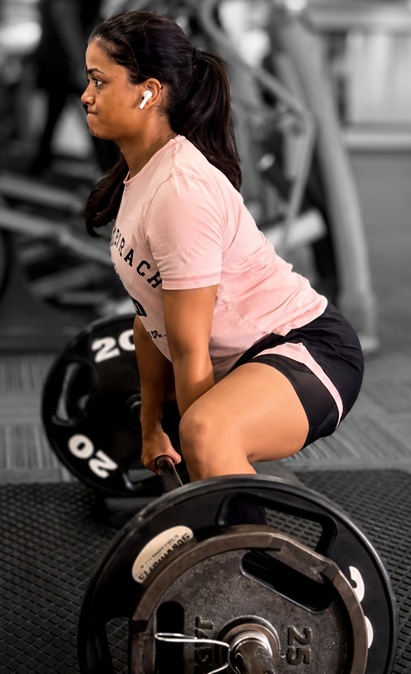
A good fitness routine should make you stronger, not more confused. It should train the whole body, improve stamina, support posture, respect recovery, and still fit into a normal week of work, family, travel, meals, and sleep.
At Pawar Fitness, the usual plan structure is built around 1-hour sessions, 3 times a week, on alternate training days. For many generally healthy clients, that rhythm is practical because it gives enough time to train with focus and enough time to recover before the next session.
This page shows what a typical week may look like for a healthy adult. It is not a fixed prescription for every person. Priyanka adjusts exercise selection, intensity, repetitions, rest, and conditioning based on your starting point, movement quality, strength level, injury history, goal, and energy on that day.
The simple weekly rhythm
A common weekly structure may look like this:
| Day | Focus |
|---|---|
| Monday | Strength training session 1 |
| Tuesday | Recovery walk, light mobility, normal meals |
| Wednesday | Strength training session 2 |
| Thursday | Recovery walk, stretching, hydration |
| Friday | Strength training session 3 |
| Saturday | Optional easy walk, mobility, outdoor activity, or rest |
| Sunday | Rest, meal planning, sleep, and recovery |
The exact days can change. Some clients train Tuesday-Thursday-Saturday instead. The main idea is simple: train, recover, train, recover, train, recover. Alternate days help the body adapt without turning fitness into daily punishment.
What each 1-hour session may include
A good session is not random. It usually has a structure, even when the exercises change.
| Session block | Approximate time | Purpose |
|---|---|---|
| Warm-up and movement preparation | 8-10 minutes | Raise body temperature, prepare joints, activate muscles |
| Main strength work | 25-30 minutes | Train important movement patterns with safe technique and progression |
| Accessory and core work | 10-12 minutes | Strengthen supporting muscles, improve posture, build control |
| Conditioning or floor aerobics | 8-10 minutes | Improve stamina and work capacity without sacrificing form |
| Cool-down and stretching | 5-8 minutes | Bring the body down, reduce stiffness, build recovery habits |
The tone is focused but not harsh. You should feel trained, not crushed. The goal is to build strength that you can repeat next week, not exhaustion that makes you disappear for ten days.
Strength training across the week
Strength training is the foundation. It helps build and maintain muscle, improve physical function, support bone and joint health, improve movement confidence, and make daily tasks easier when it is coached and progressed safely. The weekly plan usually covers all major muscle groups.
Legs and glutes
Lower-body training may include squat patterns, step-ups, lunges, hip bridges, hip thrusts, leg press variations, deadlift patterns, or bodyweight progressions. The goal is to make the legs stronger and the hips more stable.
For many clients, stronger legs also make daily life easier: climbing stairs, standing longer, carrying bags, walking with confidence, and reducing the feeling of weakness around the knees or hips.
Back and posture muscles
Back training may include rows, pulldowns, assisted pulling patterns, band pulls, face pulls, carries, and controlled hinge work. These movements support posture and help balance the body after long hours of sitting, driving, phone use, or laptop work.
A strong back is not only about appearance. It helps you stand taller, move better, and feel more supported through the shoulders and spine.
Chest, shoulders, and triceps
Push training may include incline push-ups, dumbbell presses, chest press variations, shoulder presses, landmine presses, triceps work, and controlled stability drills. These movements build upper-body strength in a safe and progressive way.
Priyanka may scale pushing exercises depending on shoulder comfort, wrist position, core control, and training history. The aim is not to force a difficult exercise. The aim is to find the right version and improve from there.
Hamstrings, hips, and posterior chain
The posterior chain includes the muscles at the back of the body: hamstrings, glutes, lower-back support muscles, and upper back. This area is important for strength, balance, posture, and controlled lifting.
Training may include hip hinges, Romanian deadlift variations, hamstring curls, glute bridges, cable pull-throughs, back extension variations, and loaded carries. These movements are taught carefully because technique matters.
Core and midsection control
Core training is not only crunches. A useful core helps you brace, breathe, lift safely, balance better, and move with control.
Core work may include dead bugs, bird dogs, planks, side planks, Pallof presses, farmer carries, hollow holds, anti-rotation drills, and controlled breathing. The goal is a strong and stable midsection, not just a burning feeling in the abs.
Conditioning and high-intensity floor aerobics
Conditioning helps build stamina and work capacity. Combined with strength training and sensible nutrition, it can support body-composition goals, improve training tolerance, and make movement feel more energetic.
At Pawar Fitness, conditioning may include simple circuits, low-impact intervals, step work, battle rope-style movements if available, medicine ball drills, bodyweight combinations, or high-intensity floor aerobics.
Floor aerobics may include movements such as march variations, step-touch patterns, squats to reach, mountain climber variations, plank taps, standing knee drives, lateral steps, fast feet, inchworms, bear-crawl patterns, or coordinated movement flows. The intensity can be increased or reduced based on the client.
A beginner does not need to jump immediately. High intensity can be created through pace, range of motion, shorter rest, or better control. For some clients, low-impact conditioning is smarter and more sustainable than aggressive jumping.
A sample 3-day training week
Day 1: Lower body, push, and core
The first session of the week often begins with lower-body strength because the body is fresh after recovery. The focus may be squats, glutes, basic pushing strength, and core stability.
A typical flow may include:
- Warm-up: breathing, hip mobility, ankle mobility, glute activation
- Strength: squat pattern, lunge or step-up pattern, chest press or push-up variation
- Accessory: glute bridge, shoulder stability, triceps or upper-body support work
- Core: plank, dead bug, or anti-rotation drill
- Conditioning: short finisher using bodyweight movements or low-impact intervals
- Cool-down: quads, hips, calves, chest, and breathing reset
This day builds the base. It teaches the body to push through the floor, control the knees and hips, and create strength without rushing.
Day 2: Back, posterior chain, and floor aerobics
The second session usually balances the body with pulling work, hip-hinge strength, upper-back control, and energetic conditioning.
A typical flow may include:
- Warm-up: spine mobility, shoulder preparation, hamstring activation
- Strength: Romanian deadlift pattern, row variation, pulldown or band pull pattern
- Accessory: hamstring curl, face pull, rear-shoulder work, grip work
- Core: side plank, Pallof press, farmer carry, or bird dog
- Conditioning: high-intensity floor aerobics or interval-based movement flow
- Cool-down: hamstrings, glutes, lats, upper back, and slow breathing
This day is especially useful for people who sit for long hours. Pulling, hinging, and upper-back work help the body feel more open, strong, and supported.
Day 3: Full body, muscle balance, and conditioning
The third session brings the week together. It may combine legs, back, pushing, core, carries, and conditioning in a balanced way.
A typical flow may include:
- Warm-up: full-body mobility and light activation
- Strength: deadlift or leg press variation, upper-body push, upper-body pull
- Accessory: glutes, shoulders, arms, calves, or posture muscles depending on need
- Core: carries, plank variation, controlled rotation, or stability work
- Conditioning: circuit-style finisher or aerobic intervals
- Cool-down: full-body stretching and weekly recovery guidance
This day helps close the week with a sense of completion. The aim is not to destroy the body before the weekend. The aim is to finish strong and recover well.
Stretching and mobility
Stretching should support training, not replace it. A practical routine uses movement preparation before training and calmer stretching after training.
Before training
Before a workout, the body usually needs movement preparation rather than long, sleepy stretches. This may include joint circles, hip openers, light squats, arm swings, band work, breathing drills, and easy movement patterns.
The goal is to prepare the body to move well.
After training
After the session, stretching can be slower. Priyanka may include stretches for the hips, hamstrings, calves, quads, chest, lats, shoulders, and upper back depending on the session.
The goal is to leave the gym feeling calm, not stiff and rushed.
On recovery days
On non-training days, 10-15 minutes of gentle mobility can help. A simple routine may include neck rotations, shoulder rolls, cat-cow, hip flexor stretch, hamstring stretch, calf stretch, child’s pose, and slow breathing.
You do not need to turn recovery days into another hard workout. Recovery is part of the plan.
A simple meal plan structure
Nutrition at Pawar Fitness is practical. It focuses on everyday Indian meals, enough protein, vegetables, hydration, and consistency. The goal is not to create fear around food. The goal is to make meals support training.
Daily meal rhythm
A simple day may look like this:
| Meal | What to focus on | Examples |
|---|---|---|
| Morning | Hydration and protein | Water, tea or coffee without excess sugar, eggs, paneer, curd, sprouts, dal chilla, besan chilla, poha with peanuts, oats with curd |
| Lunch | Balanced plate | Roti or rice, dal or curd, sabzi, salad, paneer, chicken, fish, eggs, tofu, chana, rajma, or sprouts |
| Pre-workout | Light energy | Banana, fruit, black coffee, small poha portion, toast, curd, or a simple snack depending on timing |
| Post-workout | Protein and recovery | Eggs, paneer, curd, dal, chicken, fish, tofu, whey if suitable, plus normal carbs from roti, rice, potato, or fruit |
| Dinner | Light but complete | Protein, vegetables, and controlled carbs based on hunger, goal, and workout timing |
The plate method
A simple healthy plate may include:
- Protein: Dal, curd, paneer, tofu, sprouts, chana, rajma, eggs, chicken, fish, or lean meat
- Carbohydrates: Roti, rice, millets, oats, poha, upma, potato, sweet potato, or fruit
- Vegetables: Cooked sabzi, salad, greens, cucumber, carrot, beans, capsicum, cabbage, or seasonal vegetables
- Fats: Nuts, seeds, ghee in moderation, olive oil, groundnut oil, coconut, or peanut chutney
- Hydration: Water across the day, especially around training
Food habits that matter most
Most people do not need a complicated diet on day one. They need a repeatable structure.
Start with these basics:
- Eat enough protein in each main meal
- Avoid skipping meals and then overeating late at night
- Keep water intake steady
- Add vegetables daily
- Reduce frequent fried snacks, sugary drinks, and mindless late-night eating
- Keep weekend meals enjoyable but not completely uncontrolled
- Prioritize sleep because recovery affects training energy, hunger, and consistency
The best meal plan is the one you can follow on a normal workday, not only on a perfect Monday.
How recovery fits into progress
Progress does not happen only during the workout. It happens when training, food, sleep, and recovery come together.
On recovery days, clients may be encouraged to walk, stretch lightly, drink enough water, eat normal meals, and sleep on time. These small actions look boring, but they are powerful because they make the next training session better.
If a client is tired, sore, stressed, or returning after illness or travel, the session can be adjusted. Smart coaching is not about forcing the same intensity every time. It is about keeping the person consistent without ignoring the body.
Who this routine is for
This routine is most suitable for a generally healthy adult who wants strength, stamina, better posture, improved body composition, and a more confident relationship with fitness.
It can be adapted for beginners, working professionals, clients restarting after a long break, people who sit for long hours, and anyone who wants structured coaching instead of random workouts.
If you have a medical condition, pregnancy-related or postnatal recovery consideration, major injury, heart condition, uncontrolled diabetes, severe joint pain, dizziness, breathing difficulty, or any condition requiring medical supervision, please consult your doctor before beginning intense exercise.
Ready to begin?
Start with a free trial session. Email priyanka@pawarfitness.com with your name, age, goal, preferred training time, current activity level, and any injury or health history you want Priyanka to know in advance.
Priyanka can help you understand whether this kind of routine is right for your current body, schedule, and goal.
Want this routine tailored to you?
Book a free trial and Priyanka will adapt the week to your body, schedule, and goal.